Pure Sports Medicine
Pure Sports Medicine is London’s leading sports medicine clinic. I led its digital work for a decade, and the platform we rebuilt tripled patient inquiries.

- Role
- Technical Lead
- Tenure
- 2015–2025
- Scope
- Platform, Integrations & AI
- Stakeholders
- CEO & CCO
Pure Sports Medicine is London’s leading sports medicine specialist, treating patients at clinics across the capital. I was brought in by the CEO to lead the digital side. The relationship lasted over a decade, making it one of my longest client partnerships.
The work ran from a full replatform and design system through real-time appointment booking and integrations with the practice-management and CRM systems. Patient inquiries tripled and administrative work shrank, helping enable significant growth during my tenure.
Towards the end of the relationship, I pitched and built a prototype agentic AI assistant for the clinic team. It self-updated from the clinic’s knowledge base, matched patients to specialists, and booked appointments through tool calls into the patient-management backend, with sensitive actions gated behind authentication.
Pure Sports Medicine is London’s leading sports medicine specialist. With clinics across the capital, they treat a wide range of patients, focusing on musculoskeletal care and injury prevention.
On becoming CEO, Simon Devane wanted to fix the digital side, and brought me in to lead it. What started as a website project became a partnership that lasted over a decade (one of my longest), spanning the website, platform, integrations, and eventually AI.
Strategy
The existing website was holding the business back, and a redesign alone wouldn’t fix it. The platform behind it needed rebuilding from the ground up.
Discovery came first. I dug into the site analytics and customer journeys, and scanned the wider market. Those findings shaped everything that followed.
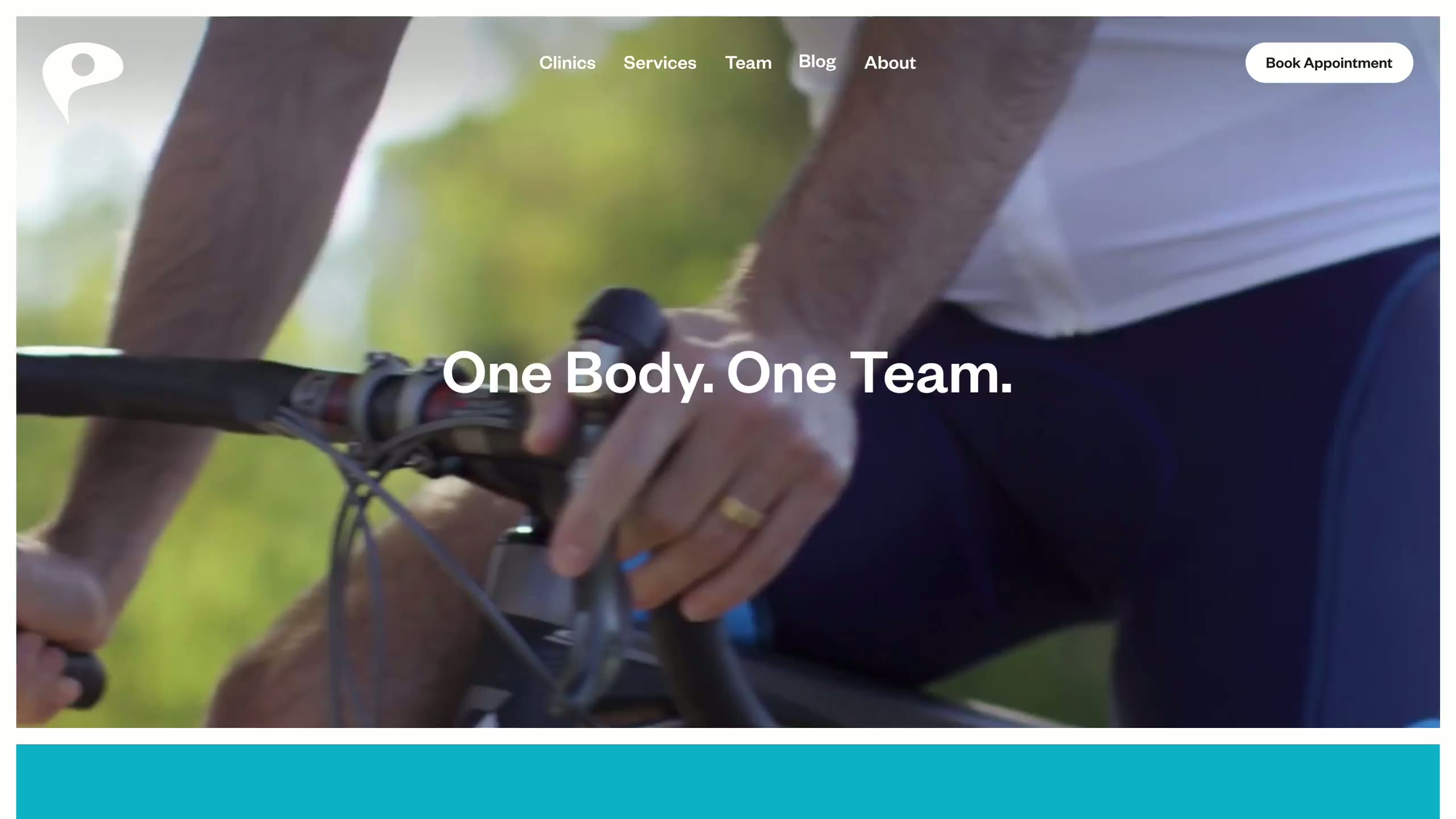
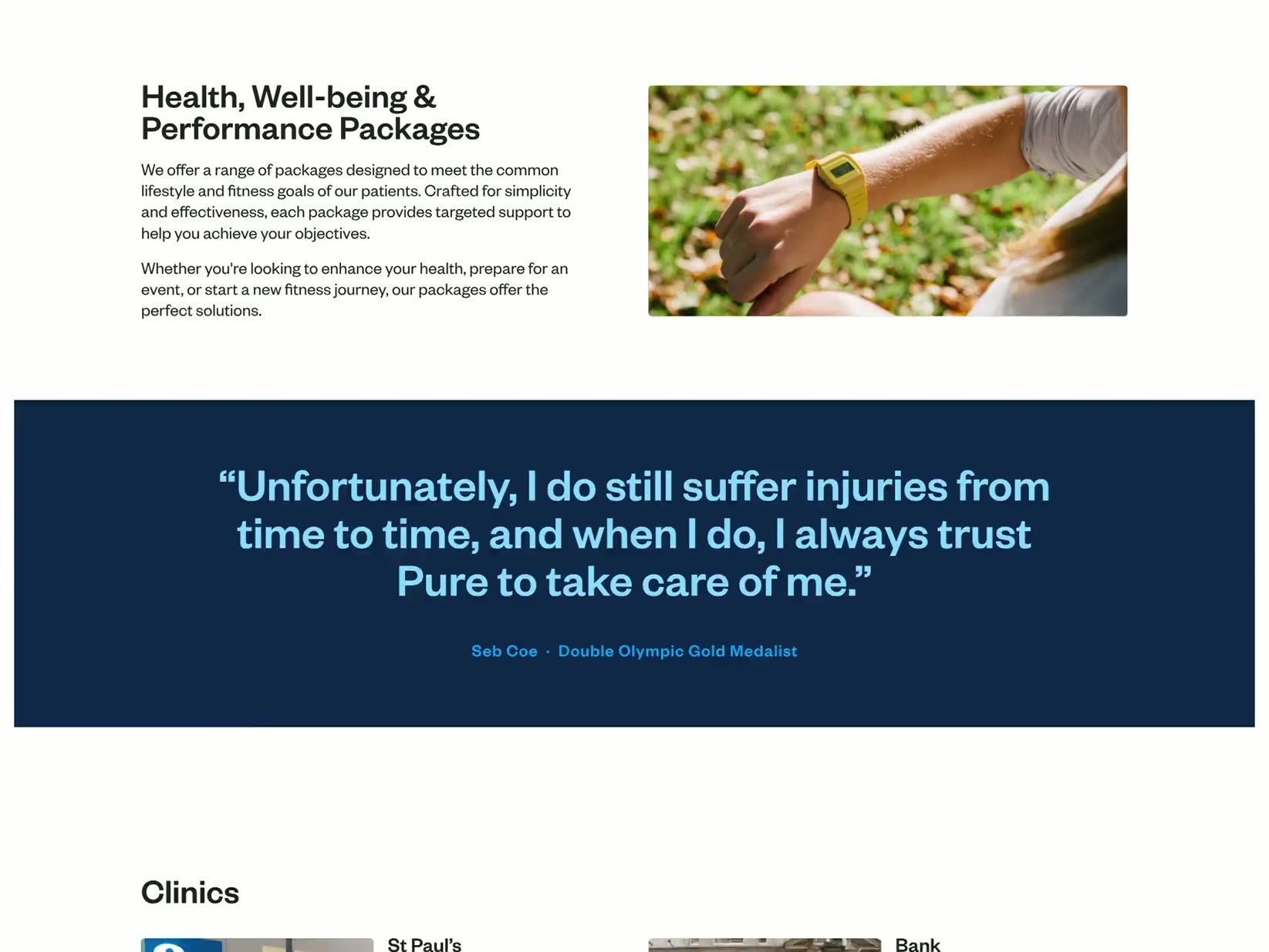
I planned the rebuild across multiple years. A new sitemap and information architecture came first, then a roadmap for the platform, integrations, and tools my team would build in the years ahead. New customer flows cut friction, giving patients easy access to information and a clear path to book an appointment.
The new website slashed administrative work, freeing the team to focus on patient care as the clinic grew.
Design
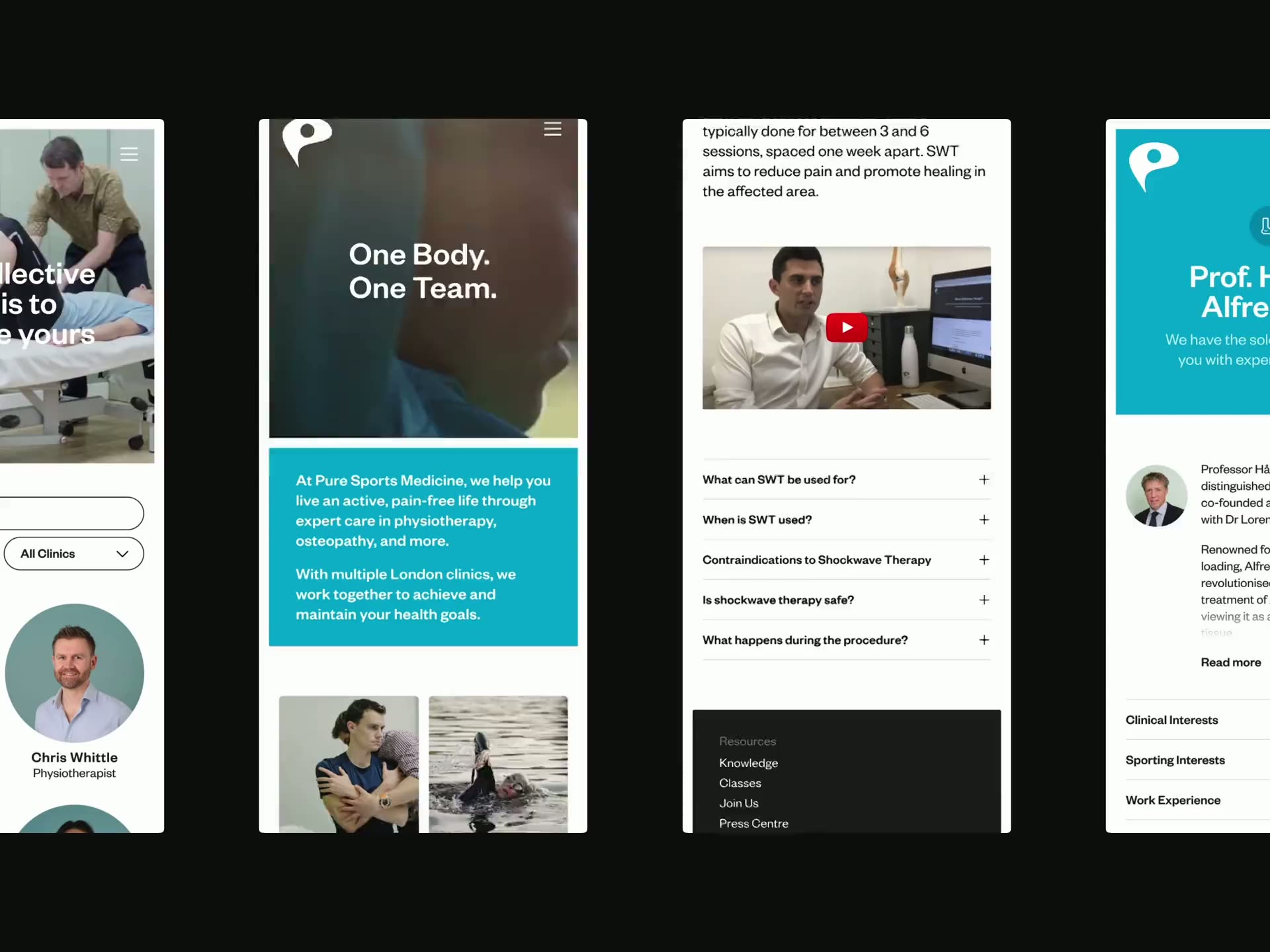
The work started with the brand, refining it for digital use, then growing it into a design system that gave every platform a cohesive look.
Service icons let patients quickly identify relevant areas of care. From there, we built a broad library of design components, the foundation for every interface that followed.
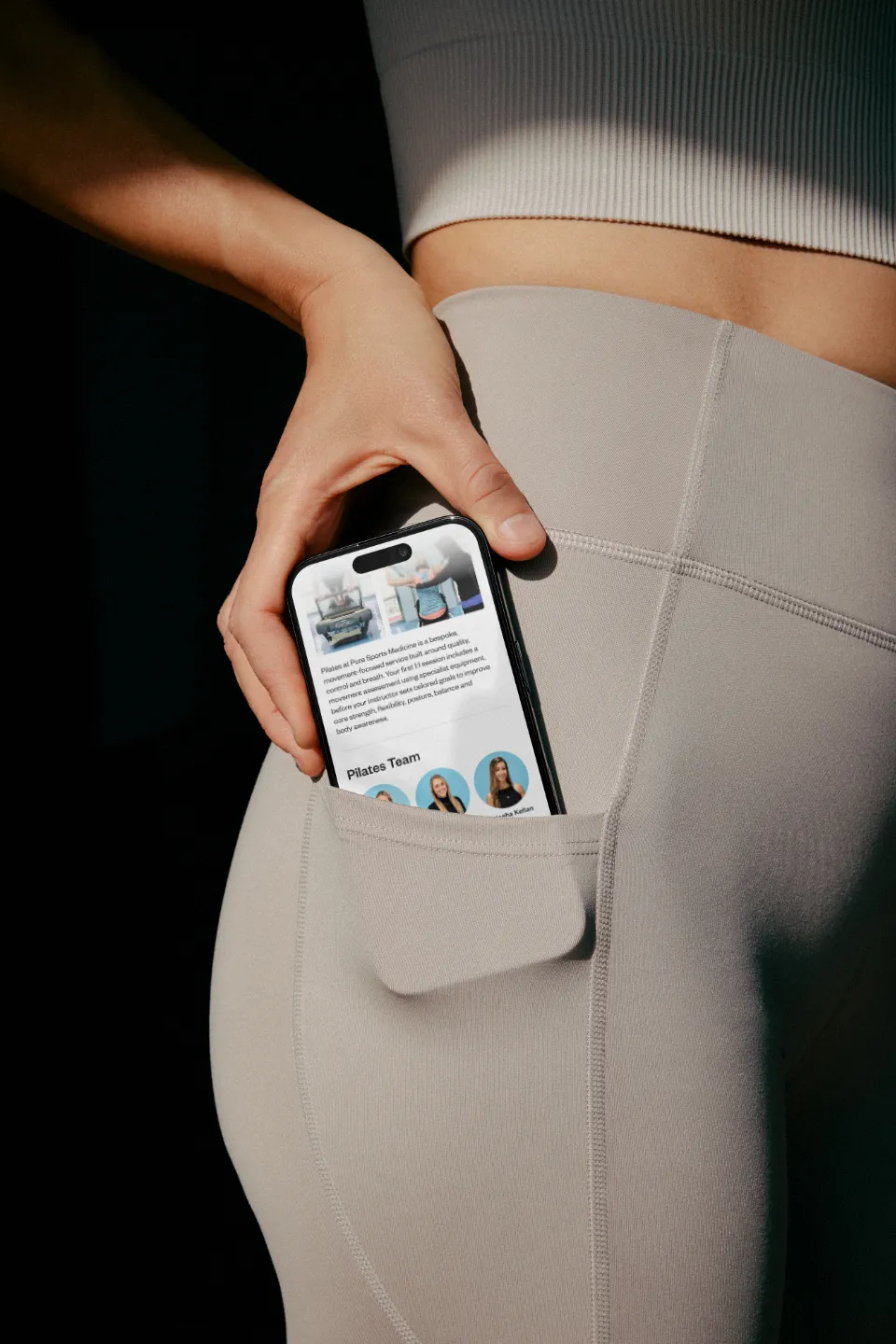
One ambition was to support more platforms over time, so the system was built to stay consistent across all of them. Wherever patients encounter Pure Sports Medicine online, they immediately know where they are.
Modularity
Flexibility is central to everything I build. It lets a system grow without a rebuild. For Pure Sports Medicine, that meant a block library running from plain text and imagery up to whole content systems.
A common issue in content models is outdated data references. The architecture stores each piece of content once. When a clinic’s details change (a phone number, a team member, a service listing), every reference updates automatically. No manual corrections across dozens of pages.
Select pages use a default template model, a more rigid structure that removes complex content management for things like clinic opening hours. Where needed, templates can be overridden for full manual control. That paid off as the business opened new clinics. The modular block system gave each location tailored content from the initial coming-soon teasers through to launches and beyond.
With this suite of tools, the team can build pages, articles, knowledge docs, and more. Everything stays current with little effort as the business grows.
Integrations
The website was only the beginning. Simon and Claire Small (co-founder of the business and its Chief Clinical Officer) wanted to streamline clinic operations, which meant integrating their back-end practice management systems.
My team and I built a real-time appointment booking system, linked via proprietary APIs and embedded into the website as part of the same brand experience. Any step in the booking flow can be linked directly, so the clinic team can send a patient straight to a specific specialist’s availability from chat, and the marketing team can do the same from newsletters and articles.
An API-first approach (my default wherever possible) paid dividends here. When the new CMO joined, plans to integrate a CRM accelerated. Using the existing API services, we connected with HubSpot. This integration powers real-time chat on the website, automated re-engagement flows, and timely offers. The team now has a full view of the customer journey from first touch to treatment.
AI
As capabilities matured, I built an agentic AI system for Pure Sports Medicine and pitched it to the management team.
The system was designed to self-update from Pure Sports Medicine’s extensive knowledge base, keeping its understanding of clinics, specialists, services, and published research current without manual intervention. It could suggest specialists based on the symptoms a patient described, matching clinical expertise with sporting interests. A patient with a tennis-related elbow injury, for example, would be matched with an upper-limb specialist who had a keen interest in tennis.
Beyond conversation, it could act. Through tool-calling into the patient-management backend, it could register a new patient, book an appointment, and add a card on file, all without leaving the conversation. Anything more sensitive was gated. Reviewing or changing an existing appointment needed authentication first. It was more an autonomous extension of the clinic team than a passive interface.
Even as a prototype, it showed what an agent could do alongside clinicians, easing their administrative load and helping them see patients faster. We ultimately opted not to pursue it, but the build proved the capability was already there.




Impact
A decade of steady shipping compounded into a different business. Patients find the right specialist and book in a few clicks, clinic teams manage content and campaigns without waiting on developers, and every system (website, bookings, CRM) works from the same joined-up foundation — with the AI prototype showing where it can go next.
- 3×
- sustained increase in patient inquiries
- 10+
- year relationship
Testimonial
“Josh is highly effective at managing stakeholder needs and working complex problems through to solution delivery.”
Simon Devane
CEO, Pure Sports Medicine
More case studies
The replatform that took The Dots to ten times the users, and one platform for a property developer’s every site.